Spend enough time reading weight-loss supplement labels and a pattern jumps out. The same four or five plants keep reappearing — repackaged, rebranded, and wrapped in bolder promises each time.
Garcinia one month, guggul the next, a “detox” blend after that. The names change. The ingredient list barely does.
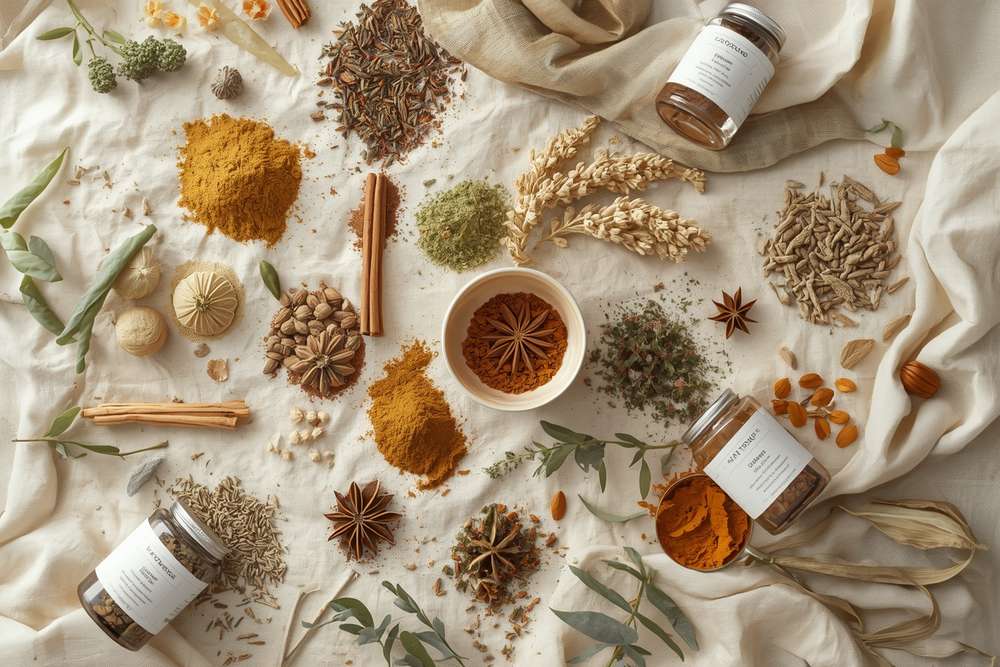
Ayurveda has real depth as a tradition, and a few of its herbs are genuinely interesting to researchers. But the version sold as a fat-burning shortcut is a different thing entirely, and the gap between the two is where people lose money — and occasionally something more important than money.
This isn’t a takedown, and it isn’t a sales pitch. It’s the honest middle: what the evidence supports, what it doesn’t, and how to tell a reasonable supplement from a risky one before you swallow it.
What “Ayurvedic Weight Loss” Actually Promises
To understand the pitch, you first have to understand the framework behind it.
Ayurveda doesn’t treat weight as a simple math problem of calories in and out. It frames it around agni — roughly, your digestive fire, the body’s capacity to process what it takes in — and ama, the sludge of poorly digested material that traditional texts say builds up when that fire runs low. Excess weight, in this view, is a symptom of imbalance rather than the core problem.
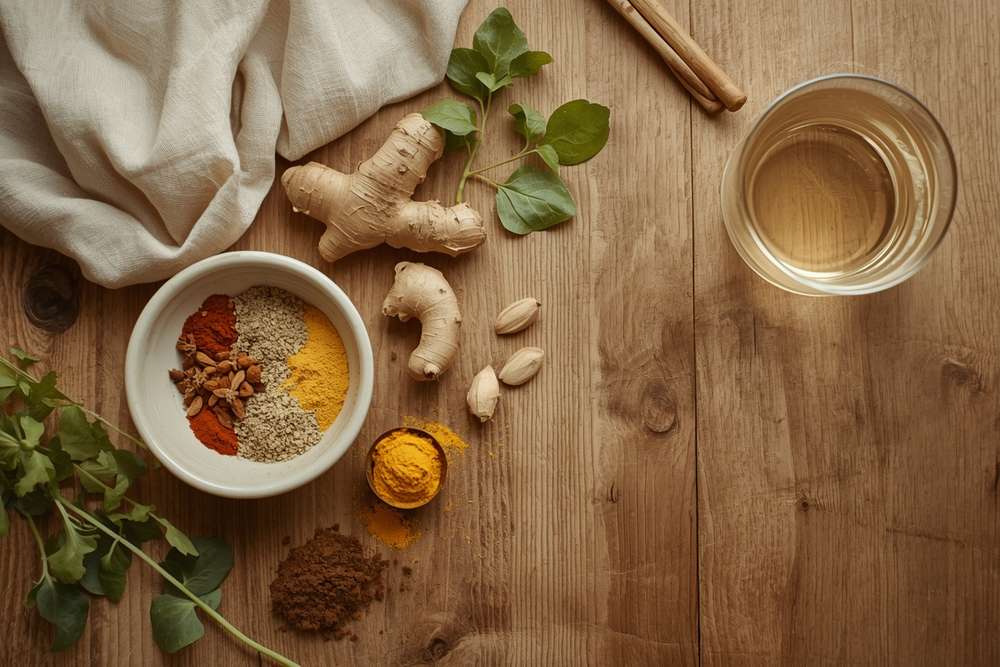
That’s a coherent philosophy. Parts of it even echo ideas modern nutrition takes seriously, because digestion, sleep, and stress really do shape how bodies store fat.
The trouble starts when a centuries-old system gets compressed into a single capsule. A tradition built on diet, daily routine, and individual constitution becomes “take this extract, lose the weight.” Something gets lost in that translation — and it’s usually the part that actually worked. Which brings us to the capsules themselves, and the surprisingly short list of plants inside almost all of them.
The Same Handful of Herbs, Under Every Brand Name
Strip away the branding and the field narrows fast. A handful of plants do the heavy lifting across nearly every product on the shelf.
Here’s the honest scorecard — what each one is sold for, and what studies have actually found. As the NCCIH notes in its overview of Ayurvedic medicine, rigorous human evidence across most of these remains thin, which is worth keeping in mind as you read down the list.
| Herb | What it’s marketed for | What research actually shows | Safety note |
|---|---|---|---|
| Garcinia cambogia (HCA) | Appetite suppressant, “fat blocker” | Small, inconsistent human trials; any weight effect is modest at best | Linked to rare but serious liver injury |
| Guggul | Boosting metabolism and fat breakdown | Studied mostly for cholesterol; weight evidence is thin and mixed | Can upset the stomach; may interact with thyroid and blood-thinning drugs |
| Triphala | “Detox” and better digestion | Early signals on some metabolic markers; weak for weight itself | Usually mild; acts as a laxative at higher doses |
| Ashwagandha | Lowering stress and cortisol to shed weight | Best-supported for stress and sleep; any weight effect is indirect | Generally well tolerated; rare liver-injury reports exist |
| Fenugreek | Curbing appetite, steadying blood sugar | Some appetite and glucose signals; limited data on actual weight loss | Digestive effects, possible allergy, interacts with some medications |
Read down that middle column and the honest summary writes itself: interesting, occasionally promising, rarely convincing. But if the effects are that modest, is there really any harm in trying? That question deserves a straight answer.
“But It’s Natural — So It’s Safe,” Right?
It’s the most reasonable-sounding objection in the whole conversation. These are plants, people have used them for centuries, so how dangerous could a capsule really be?
Reasonable — and wrong in a very specific way. “Natural” and “safe” are two separate claims, and the second one has to be earned. Here’s why the leap from one to the other doesn’t hold:
- Dose isn’t standardized. Two bottles of the “same” extract can differ several-fold in strength, so you rarely know what you’re actually taking.
- Traditional use tested something else. Old preparations were whole herbs used in context, not concentrated single-compound capsules swallowed daily for months.
- Plants interact with drugs. Blood thinners, thyroid medication, and diabetes drugs can all be thrown off by “gentle” botanicals.
- Nobody checks before it sells. Supplements aren’t reviewed for safety ahead of time, so problems tend to surface only after someone gets hurt.
That last point isn’t theoretical. An FDA warning spells it out plainly: there are no FDA-approved Ayurvedic products, and some have caused genuine harm that only came to light after the fact.
Here’s where most people slip up: “natural” describes where a substance comes from, not whether it’s safe to concentrate and take every day. Safety is proven through testing — and this category gets far less of it than the word on the label suggests.
And potency is only half the safety story. The other half is what ends up in the capsule that was never meant to be there at all.
The Contamination Problem Nobody Prints on the Label
Here the concern shifts from the herb itself to what travels alongside it. This is the part most articles skip, and it’s the part that matters most.
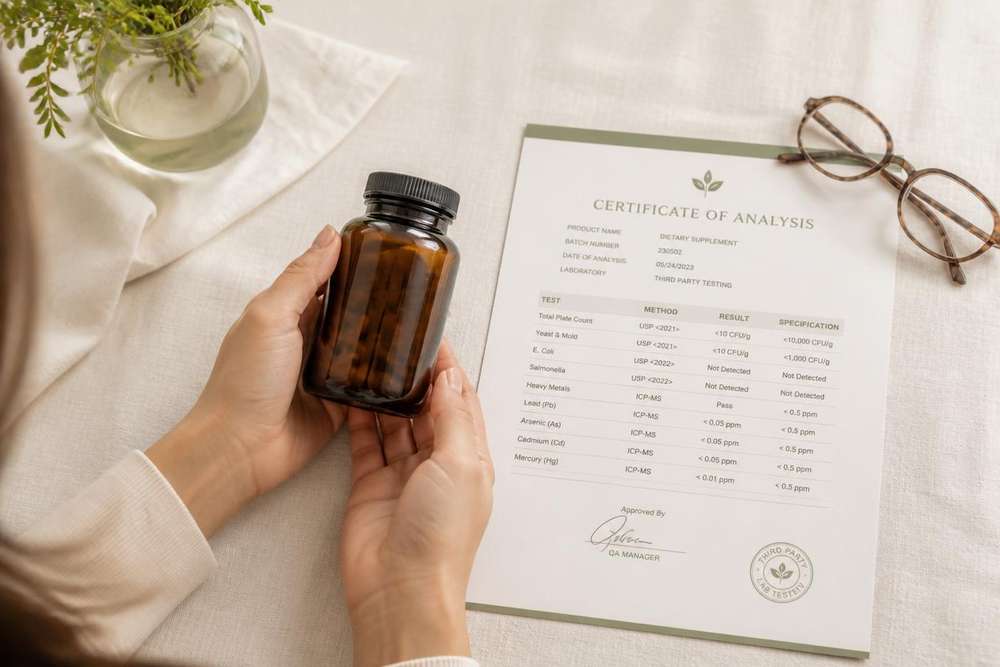
When researchers behind a JAMA analysis in 2004 bought and tested 70 Ayurvedic products, roughly one in five contained detectable levels of lead, mercury, or arsenic — sometimes well above safe limits. These metals aren’t listed as ingredients. You can’t taste them, and you won’t find them on the label.
Then there’s the liver. According to the NIH’s LiverTox database, weight-loss products containing Garcinia cambogia have been tied to cases of acute liver injury, some of them severe. The suspected mechanism is oddly specific: hydroxycitric acid, Garcinia’s active compound, blocks an enzyme the liver uses to build fat, and in people who carry a particular genetic marker the immune system appears to overreact.
Worth being fair here, because the picture isn’t black and white. Many of those reported cases involved multi-ingredient blends, and the exact role of Garcinia on its own hasn’t been fully pinned down. The reasonable read is “uncommon but real” — not “certain poison,” but not a risk to wave away either.
So how do you protect yourself if you still want to try something? A short checklist filters out most of the danger:
- Look for third-party testing — a USP or NSF seal, or a published lab report screening for heavy metals.
- Choose a single clearly stated ingredient and dose, not a proprietary “blend” that hides how much of anything you’re getting.
- Treat promises of dramatic, effortless loss as a marketing tell, not a sign of strength.
- Check the manufacturer: country of origin, contact details, and batch testing should all be easy to find.
So if the capsule is the weak link, where does the real change come from? The answer has been sitting inside Ayurveda all along — just not in the part that fits in a bottle.
What Actually Moves the Number on the Scale
This is the anticlimax nobody wants to hear, and the most useful thing on the page. The things that reliably shift weight are unglamorous, unbranded, and free.

Ayurveda’s genuine contribution was never a fat-burning herb. It was the surrounding discipline — how you eat, how you sleep, how you handle stress. Modern research keeps landing in the same place. And it’s here that ashwagandha earns its one honest role: a 2024 review in the Journal of the American Nutrition Association examined how chronic stress and elevated cortisol drive the kind of comfort-eating that fuels weight gain, with ashwagandha studied as a way to blunt that stress response, not to melt fat directly.
Put plainly, the levers that work look like this:
- Build meals around protein and fiber — both curb appetite far more reliably than any capsule.
- Protect your sleep, because short nights push hunger hormones in exactly the wrong direction.
- Manage stress, since cortisol that stays high nudges the body toward storing fat — the one spot where ashwagandha has a credible, if modest, part to play.
- Move in a way you’ll actually repeat. Consistency over months beats intensity for a week.
If you change one thing: fix the sleep, food, and stress foundation first — and judge any herb only as a small add-on to that, never as the engine doing the work.
Which raises a question worth sitting with. If the foundation is doing the work, what were we really buying?
The Herb Was Never the Point
Step back and the whole market looks a little different. The search for the right Ayurvedic herb is rarely about the herb. It’s about wanting an easier answer than the one we already know.
That instinct is human, not foolish. But the tradition being borrowed from was never a shortcut in the first place — it was a system of attention, paid daily, to how a body is fed and rested and calmed.
Take the herbs if you like the ritual and you’ve checked the label. Just don’t hand them a job they were never able to do. The real work was always going to be yours, and the quiet good news is that it works.
The information here is drawn from published research and health-agency guidance, but bodies and medical histories differ — before starting any supplement, especially alongside existing medication, it’s worth a quick conversation with a doctor or pharmacist who knows your situation.
Frequently Asked Questions
Do Ayurvedic herbs actually help you lose weight?
For most of them, the human evidence is modest and inconsistent. A few may nudge appetite or metabolism slightly, but none work as a standalone solution. The reliable results come from the lifestyle side of Ayurveda — food, sleep, and stress — rather than from any single extract.
Is Garcinia cambogia safe for your liver?
It has been linked to rare but sometimes serious cases of liver injury, often in multi-ingredient weight-loss products. The exact risk isn’t fully defined, so caution is sensible — particularly if you take other medications, have a liver condition, or notice symptoms like fatigue, dark urine, or yellowing skin.
Do Ayurvedic supplements really contain heavy metals?
Some do. Independent testing has found that a meaningful share of products carried detectable lead, mercury, or arsenic, none of it listed on the label. Choosing supplements with third-party testing for contaminants is the single best way to lower that risk.
Does ashwagandha help with weight loss?
Only indirectly. Its best-supported effects are on stress, cortisol, and sleep, which can influence stress-driven eating. Think of it as support for the conditions around weight, not a fat-burner in its own right.