What the science says about nopal, grapefruit, pineapple & more — and why the format of your drink matters more than you think.
Hello, dear Jeffco woman! If you’ve ever felt like your body stopped responding the way it used to — like no matter what you eat, your weight barely budges — you’re not imagining things, and you’re definitely not alone. What you’re experiencing has a name: a sluggish metabolism. And while the word gets thrown around constantly in wellness circles, very few people explain what it actually means, why it happens, and most importantly, what specific natural ingredients have the scientific evidence to address it.
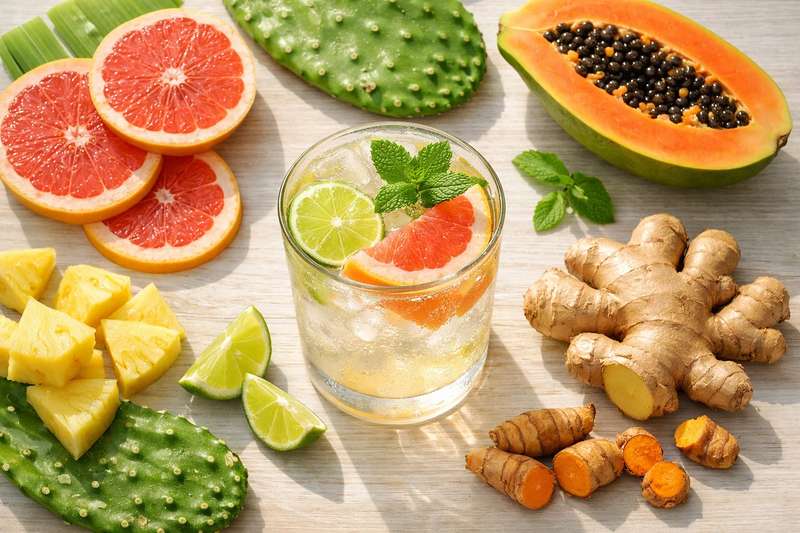
In this article, we’re going deep on the tropical ingredients that are quietly becoming a big deal in the world of natural wellness — from the nopal cactus native to Mexico to grapefruit bioflavonoids and pineapple enzymes. We’ll also look at why the tonic format is generating so much attention right now, and introduce you to a product called Berzeo that brings many of these ingredients together in a single daily routine.
One quick note before we dive in: if you’re looking for a broader overview of healthy beverages and general nutrition planning, we’ve already covered that ground in detail on this site. This article is specifically about the metabolic science behind tropical tonic ingredients — that’s a different conversation, and it’s one worth having.
Why Does the Metabolism Slow Down in the First Place?
Before we talk solutions, let’s understand the problem. Your metabolism is essentially the sum of all the chemical processes your body uses to convert food and drink into energy. When people say their metabolism is “slow,” what they usually mean is one or more of the following things are happening simultaneously.
- First, there is the natural decline that comes with age. After 30, the average person loses approximately 3–5% of muscle mass per decade, and since muscle tissue is metabolically active — meaning it burns calories even at rest — less muscle means fewer calories burned throughout the day.
- Second, chronic low-grade inflammation can impair how efficiently your cells respond to insulin, which directly affects how your body stores or burns fat.
- Third, poor gut microbiota diversity has emerged in the last decade as a surprisingly powerful driver of metabolic dysfunction. When the balance of bacteria in your intestines is off, it affects everything from how you absorb nutrients to how you regulate hunger hormones like ghrelin and leptin.
The result is a body that stores more, burns less, and leaves you exhausted despite doing what feels like everything right. Sound familiar?
Signs Your Metabolism Might Be Sluggish
- You gain weight easily but lose it very slowly, even with dietary changes
- You feel bloated or heavy after eating, especially in the afternoon
- Your energy crashes mid-day without a clear reason
- You feel cold more often than people around you
- You experience strong cravings for sugar or starchy foods, especially between meals
- Your digestion feels slow — irregular or infrequent bowel movements
- Despite sleeping enough, you wake up feeling tired and unrestored
If several of these sound like your daily reality, the good news is that the right nutritional inputs — specifically the ones we’re about to cover — can genuinely help shift the picture.
What Makes Tropical Ingredients Different?
There’s something noteworthy about plants that evolve in hot, humid, tropical and semi-arid climates. They tend to develop concentrated bioactive compounds — enzymes, flavonoids, polyphenols, and dietary fibers — that go well beyond basic nutrition.
Many of these compounds have been used in traditional medicine in Latin America and Central America for centuries. What’s exciting is that over the last two decades, researchers have started publishing peer-reviewed data that explains exactly what these plants do at a cellular and metabolic level.
The six ingredients below represent the strongest evidence we currently have for tropical plants that specifically support metabolic health. They are not a cure-all, and we’ll be clear about what the research does and doesn’t say. But the evidence is solid enough to take seriously.
The 6 Tropical Ingredients With the Strongest Metabolic Evidence
Nopal (Opuntia ficus-indica)
Nopal is a species of cactus native to Mexico and widely distributed across Latin America and the Mediterranean. It is probably the most studied plant in this list for metabolic applications. A double-blind, placebo-controlled clinical trial published in NCBI found that cactus fiber binds to dietary fat in the gut, reducing its absorption before it can enter the bloodstream.
A separate study published in PMC/Nutrients (2022) on obese women found that nopal supplementation combined with caloric restriction led to measurable improvements in blood glucose, total cholesterol, and gut microbiota diversity — all markers directly linked to metabolic health.
Nopal’s high content of soluble fiber (mucilages and pectins) appears to work by slowing the passage of food through the digestive tract, flattening blood sugar spikes after meals, and literally binding fat molecules so the body excretes them rather than storing them. The fiber also feeds beneficial gut bacteria, which over time improves the gut environment that regulates how your body handles energy.
Grapefruit (Citrus paradisi)
Grapefruit contains a flavonoid called naringenin that has received significant attention in metabolic research. Naringenin has been shown to influence gene expression in the liver in ways that promote fat oxidation — essentially encouraging the body to use stored fat as an energy source. It also has mild insulin-sensitizing properties, which helps the body regulate blood sugar more efficiently.
Grapefruit is also one of the few fruits where the consumption of the whole fruit (or a concentrated extract) has been associated in clinical observation with lower body weight compared to control groups, independent of caloric restriction alone.
Pineapple Bromelain (Ananas comosus)
Bromelain is a complex of proteolytic enzymes found in both the fruit and stem of the pineapple plant. Its primary function is breaking down protein structures — which makes it valuable for digestion — but its effects extend considerably further.
A 2025 narrative review in PMC covering both animal and human studies found that bromelain reduces macrophage infiltration into fat tissue and shifts inflammatory patterns from pro-inflammatory to anti-inflammatory states, which directly improves how fat cells function metabolically.
An 8-week randomized controlled trial on obese patients with type 2 diabetes showed that 500mg of bromelain twice daily led to measurable reductions in BMI and waist circumference compared to the control group.
Papaya (Carica papaya)
Papaya contains papain, another proteolytic enzyme with a profile similar to bromelain. Papain is particularly effective at improving digestive efficiency — helping the body break down and absorb proteins and nutrients from food more completely.
When digestion is inefficient, the metabolic burden increases and energy extraction from food becomes erratic. Improving digestive function with papain essentially removes a downstream drag on your metabolic rate. Papaya also contains a range of antioxidants including vitamin C, beta-carotene, and lycopene, which help reduce the oxidative stress that’s closely linked to inflammation and metabolic dysfunction.
Ginger (Zingiber officinale)
Ginger is one of the most extensively researched thermogenic foods — meaning it generates a mild increase in body temperature as part of its metabolic effect. The active compounds gingerols and shogaols stimulate thermogenesis, which increases calorie expenditure.
Multiple meta-analyses have confirmed ginger’s ability to reduce fasting blood sugar and improve insulin resistance in people with metabolic syndrome. It also has well-documented anti-inflammatory properties, which as we discussed earlier is a core underlying driver of a sluggish metabolism.
Turmeric / Curcumin
Curcumin, the active compound in turmeric, has perhaps the broadest research base of any natural anti-inflammatory compound currently known. Its relevance to metabolism comes specifically from its ability to reduce chronic low-grade inflammation — the same kind that impairs insulin signaling and fat-burning efficiency.
What’s interesting about curcumin in the context of tonics is that its bioavailability is dramatically improved when it’s dissolved in liquid along with black pepper extract or fat-soluble compounds, making the tonic format particularly suitable for this ingredient compared to isolated capsules.
If you want to understand how curcumin and anti-inflammatory nutrition interact with joint and muscle health specifically, the Motion Energy & Chronic Pain article on this site covers that angle in depth.
| Ingredient | Key Active Compound | Primary Metabolic Action | Evidence Level |
|---|---|---|---|
| Nopal | Soluble fiber (mucilages, pectin) | Binds dietary fat; flattens blood sugar spikes; improves gut microbiota | 🟢 Multiple RCTs & clinical trials |
| Grapefruit | Naringenin (flavonoid) | Promotes fat oxidation; improves insulin sensitivity | 🟡 Positive clinical observation; mechanisms confirmed |
| Pineapple (Bromelain) | Proteolytic enzymes | Reduces inflammatory fat tissue; improves BMI & waist in obese patients | 🟢 RCT + multiple animal and in vitro studies |
| Papaya | Papain enzyme, antioxidants | Improves digestive efficiency; reduces oxidative stress | 🟡 Strong traditional use + enzyme mechanism confirmed |
| Ginger | Gingerols, shogaols | Thermogenic; reduces fasting blood sugar; anti-inflammatory | 🟢 Multiple meta-analyses |
| Turmeric (Curcumin) | Curcumin | Reduces chronic low-grade inflammation; improves insulin signaling | 🟢 Extensive peer-reviewed research |
Sources: PMC (Nopal fiber RCT), PMC Bromelain Review 2025, PMC Nopal gut microbiota study
Why the Tonic Format Matters More Than You Might Think
Here’s something that rarely gets discussed in wellness content: the delivery format of a natural supplement significantly affects how well your body can actually use it. This isn’t a minor detail — it has real implications for whether an ingredient does anything at all once you consume it.
When you dissolve a powder or liquid tonic in water, the active compounds are immediately dispersed in an aqueous environment. This means they begin interacting with your digestive system starting in the mouth, not after spending 20–30 minutes in a hard capsule slowly dissolving in stomach acid.
Enzymes like bromelain and papain are particularly sensitive to this: they work best when they’re already in liquid form and in direct contact with food as it moves through your gut.
Soluble fibers like those in nopal also behave very differently in liquid form. They expand and form a gel matrix in the stomach when mixed with water, which is precisely the mechanism by which they trap dietary fat and slow glucose absorption. Without adequate hydration, this effect is dramatically reduced.
Curcumin from turmeric has notoriously low bioavailability when taken as a dry capsule — studies estimate as little as 1% is absorbed. When formulated in a liquid tonic alongside fat-soluble or piperine-enhancing components, absorption can increase substantially. This is one of the reasons the tonic format is gaining credibility in natural wellness formulations, not just as a delivery preference but as a genuine bioavailability advantage.
| Factor | Liquid Tonic | Capsule / Pill | Whole Food |
|---|---|---|---|
| Absorption speed | Fast — starts in mouth | Delayed — capsule must dissolve | Variable — depends on food matrix |
| Enzyme activity | High — enzymes active in liquid | Reduced — dry environment inhibits enzyme function | Good, but concentration varies |
| Fiber mechanism (nopal) | Optimal — hydration enables gel matrix formation | Partial — requires additional water intake | Good when prepared with water |
| Ingredient combination | Multiple ingredients in one serving | Limited by capsule size | Single ingredient per food item |
| Ease of daily use | Very easy — 10 seconds to prepare | Easy | Requires sourcing, prep & cooking |
| Curcumin bioavailability | Higher with proper formulation | As low as 1% without piperine | Moderate with fat & pepper added |
Based on bioavailability research and general pharmacokinetics of phytonutrients in different delivery formats.
Berzeo: Where These Tropical Ingredients Come Together
For women who want to make these ingredients a consistent part of their daily routine without sourcing, prepping, and combining six different tropical plants every morning, Berzeo Reshape Zero Tonic is a product worth understanding.
It’s a powdered tonic formulated specifically around the metabolic ingredient stack we’ve been discussing: nopal, grapefruit, pineapple (bromelain), papaya (papain), ginger, turmeric, citrate de magnesium, and B vitamins (B6 and B12).
What makes it relevant in the context of this article is that it was formulated with a Latin American metabolic profile in mind — recognizing that the gut microbiota, food traditions, and metabolic tendencies of women from Mexico and Latin America have specific characteristics that generic European or North American weight management products don’t always address well. Ingredients like nopal aren’t exotic additions here; they’re native staples that the body already has a long cultural and biological relationship with.
Berzeo is taken by dissolving one scoop in a glass of water, ideally in the morning before breakfast. This delivers the nopal fiber into an empty stomach where it can begin forming its fat-binding gel matrix before the first meal.
The pineapple and papaya enzymes are present in liquid form, making them immediately active for the digestive processes that follow. The ginger and turmeric work as a morning thermogenic and anti-inflammatory primer. The magnesium and B vitamins support energy metabolism at the cellular level throughout the day.
Isabela Martínez from VivaSanoMX — whose work you can read more about on our Meet Isabela Martínez page — has shared her personal, honest experience with Berzeo in detail. Her week-by-week account covers what changed in terms of energy, bloating, cravings, and weight over a period of three months of consistent use, with full transparency about what it does and doesn’t do.
If you want the full personal review and product details including current pricing and how to order, you can read her complete Berzeo review here.
The Science Behind Why These Ingredients Work as a Stack
One thing the research consistently shows is that metabolic dysfunction is not a single-mechanism problem. A sluggish metabolism involves impaired fat absorption efficiency, blood sugar instability, chronic inflammation, poor gut microbiota diversity, and often deficiencies in key B vitamins and magnesium that support mitochondrial energy production. Addressing any one of these in isolation tends to produce modest results at best.
The reason multi-ingredient tropical tonic formulations are generating interest is precisely because they target several of these mechanisms simultaneously. Nopal handles the fat-binding and blood sugar stabilization role. Bromelain and papain address the inflammatory and digestive components.
Ginger provides the thermogenic signal. Turmeric/curcumin manages the systemic inflammation that impairs insulin signaling. Magnesium and B vitamins fill the nutritional gaps that often underlie fatigue and poor cellular energy production.
Think of it like a team: each player has a specific role, and the team performs significantly better than any individual player would alone. This is a well-established principle in nutritional science — it’s called synergistic bioactivity, and it’s one of the reasons that traditional herbal preparations using multiple plants together have often outperformed isolated single-compound extracts in functional outcomes.
That same logic runs through other traditional systems, though not every herb lives up to its reputation. If you’re weighing plant-based options, our breakdown of traditional Ayurvedic remedies shows where the human evidence holds up, where it thins out, and how to spot a supplement worth trusting.
Chart 1 — Metabolic Mechanisms Addressed by Each Tropical Ingredient
Scale: 1–5 bars indicate relative strength of evidence for each metabolic mechanism per ingredient (based on published literature).
| Ingredient | Fat Metabolism | Blood Sugar | Inflammation | Digestion | Thermogenesis |
|---|---|---|---|---|---|
| Nopal | ████░ | █████ | ██░░░ | ████░ | █░░░░ |
| Grapefruit | ████░ | ████░ | ███░░ | ██░░░ | ██░░░ |
| Pineapple | ████░ | ███░░ | █████ | █████ | █░░░░ |
| Papaya | ██░░░ | ██░░░ | ███░░ | █████ | █░░░░ |
| Ginger | ███░░ | ████░ | █████ | ███░░ | █████ |
| Turmeric | ███░░ | ███░░ | █████ | ██░░░ | ██░░░ |
Visual representation based on published peer-reviewed evidence. Bar length represents relative strength of evidence, not absolute potency values.
How to Know if a Metabolism Tonic Is Actually Working
This is the question that matters most, and it’s one most product marketing deliberately avoids. Here’s what to realistically look for when using any tropical metabolism tonic consistently for 4–8 weeks.
- Reduced afternoon bloating — if the digestive enzymes and fiber are working, you should notice less distension and heaviness after meals within the first 1–2 weeks
- More stable energy throughout the day — blood sugar stabilization from nopal and ginger means fewer mid-day crashes and less desperate reaching for sugar or caffeine
- Reduced intensity of cravings — particularly for sweets and starchy foods between meals; this is one of the more reliable early signs that blood sugar regulation is improving
- Gradual, consistent weight movement — not dramatic, not immediate, but a slow downward trend when combined with reasonably sensible eating; expect to notice something meaningful after weeks 3–4
- Improved morning energy — B vitamins and magnesium supporting mitochondrial function should translate into waking up feeling more restored
- Changes in how your clothes fit — particularly around the waist and abdomen, which is where metabolically driven inflammation and fat accumulation tend to be most visible
What you should not expect: dramatic weight loss in week one, appetite disappearing entirely, or any result that substitutes for healthy eating and movement. Natural metabolic support works incrementally and cumulatively.
That’s not a limitation — it’s actually a sign of a sustainable, physiologically sound approach. For tips on building active habits alongside this kind of nutritional support, our Active Living page has practical guidance tailored for our community.
| Timeframe | What You May Notice | Mechanism Behind It |
|---|---|---|
| Days 1–7 | Less post-meal bloating; slightly more energy in mornings | Digestive enzymes (bromelain, papain) beginning to reduce digestive friction; B vitamins supporting cellular energy |
| Weeks 2–3 | Reduced afternoon cravings; more stable energy arc through the day | Nopal fiber improving blood sugar stability; ginger thermogenesis beginning to show in energy metabolism |
| Weeks 3–5 | Scale begins moving; waist measurement may decrease; clothes fitting differently | Combined fat-binding, reduced inflammation, and improved insulin sensitivity beginning to affect body composition |
| Weeks 6–12 | Sustained weight changes; improved gut health; better quality sleep | Cumulative gut microbiota improvements (nopal + fiber); systemic inflammation reduction (curcumin, ginger); metabolic rate normalization |
Timeline is general and individual results vary. Based on evidence from ingredient-specific clinical studies, not product-specific trials. Always consult a healthcare provider if you have underlying health conditions.
A Note on Food Access and Seasonal Availability
One genuinely practical challenge with tropical ingredients is that they’re not always easy to source fresh, especially in communities where access to specialty produce is limited. Fresh nopal, papaya, and pineapple in the quantities needed to achieve the metabolic effects described above are simply not available to everyone year-round, and the preparation and consistency required to use them daily as whole foods is a real barrier for most people with busy lives.
This is one of the legitimate use cases for a concentrated tonic formulation — it removes the sourcing and preparation barrier while delivering the active compounds in the most bioavailable format. It’s worth noting that this is a conversation about equity in nutritional access too. On our Food Access page, we explore the broader context of who has access to what foods in our community — and how those gaps affect health outcomes.
Frequently Asked Questions
Are tropical metabolism tonics safe for everyone?
For the vast majority of healthy adults, yes. The ingredients covered in this article — nopal, grapefruit, pineapple, papaya, ginger, and turmeric — have long histories of food use and well-documented safety profiles. That said, there are exceptions. People taking blood-thinning medications should consult a doctor before taking bromelain in concentrated form.
Grapefruit is known to interact with certain prescription medications, including some statins and calcium channel blockers, because it inhibits a liver enzyme that processes those drugs. If you are on prescription medication, always check with your healthcare provider before adding any concentrated botanical supplement to your routine.
Can I get the same benefits from eating these fruits and vegetables whole?
In theory, yes — and if you have access to fresh nopal, grapefruit, pineapple, and the rest on a daily basis, eating them as whole foods is always a good choice. In practice, the concentrations of active compounds in whole foods are lower and more variable than in standardized extracts, and the practical consistency of consuming all six ingredients daily in meaningful amounts is unrealistic for most people. A well-formulated tonic bridges that gap.
Do I need to change my diet or exercise to see results?
A tropical metabolism tonic is a support tool, not a replacement for a generally sensible lifestyle. You don’t need to follow a strict diet or commit to intense exercise, but some level of reasonably healthy eating and movement will amplify any results you get from the tonic ingredients.
Think of it as turning on a fan in a room — it helps, but it works much better if the windows are open. For practical movement ideas that don’t require a gym, our Active Living guide is a good starting point.
How is this different from Reduslim or other weight loss supplements?
Good question. Reduslim and similar capsule-based supplements typically rely on thermogenic compounds like capsaicin, green tea extract, and ginger as their primary mechanism — essentially stimulating calorie burn.
The tropical tonic approach we’ve described here operates through multiple additional mechanisms: fiber-based fat binding, enzyme-driven digestion improvement, gut microbiota modulation, and chronic inflammation reduction. They’re different tools with different mechanisms. You can read more about how capsule-based weight loss supplements like Reduslim work on this site if you want to compare approaches.
How long should I try a tonic before deciding if it works?
Based on the timelines in the research — particularly the nopal gut microbiota study that ran over 8 weeks and the bromelain RCT that ran over 8 weeks — a fair minimum test period is 4–6 weeks of consistent daily use. The changes we’re describing are physiological and incremental, not dramatic and immediate. If after 6–8 weeks of consistent use you notice none of the markers we described in the “How to Know if It’s Working” section, that’s worth paying attention to.
The Bottom Line
Tropical ingredients like nopal, grapefruit, bromelain-rich pineapple, and papaya are not wellness trends built on hype. They have real, peer-reviewed science behind their metabolic mechanisms — and the reasons they’re being formulated into liquid tonics rather than capsules has more to do with bioavailability than marketing preference.
The research on these ingredients is compelling enough to warrant taking them seriously as part of a holistic approach to metabolic health. They work on multiple mechanisms — fat binding, blood sugar stabilization, digestive support, anti-inflammation, and gut microbiota — which is why combining them in a synergistic formula tends to outperform using any single ingredient in isolation.
If you want to explore a tonic built around exactly this ingredient philosophy, Isabela Martínez’s full review of Berzeo Reshape Zero Tonic is one of the most detailed honest accounts available, including her week-by-week experience and a thorough breakdown of every ingredient. It’s a good read whether you ultimately try the product or not.
And if you want to go deeper on how your overall diet affects not just your weight but also your skin, energy, and long-term wellbeing, the Diet, Skin and Aging article on this site connects many of those same anti-inflammatory principles to visible health outcomes worth knowing about.